If you're reviewing how your firm assesses graduates and interns, skills-based hiring is probably already on the table. This guide covers what it means, what it doesn't, and a six-step approach to introducing it without rebuilding your process.
Skills-based hiring evaluates candidates on demonstrated ability to do the work, rather than on proxies such as degree class, university, or previous job titles. It has grown across sectors as employers have found that credentials alone tell them less than they used to about who will perform well once they start.
In early careers, where most applicants have little or no work history to go on, that shift matters more than almost anywhere else. It means assessing how someone performs a task, rather than what their CV says they have already done.
What skills-based hiring looks like in practice
It starts with a narrower question than most processes ask. Not who looks impressive in general, but what this particular role needs. A sales and trading desk and a quantitative research team want different things, and a process built to find generally impressive people will often send both of them similar shortlists.
The purpose isn't to screen more people out. It's to find the people your current filters miss.
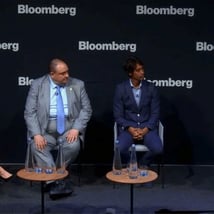
"There are magical candidates in every cohort. The right assessment helps you find those gems amongst the mix."
Nora Nagi
Head of Client Relationships, AmplifyME
Why skills-based hiring is reaching Early Careers now
Three things have happened at once. Application volumes have risen. AI-assisted applications have made written stages harder to read, because a well-written cover letter no longer tells you much about the person who submitted it. And at graduate and intern level, academic signals can separate candidates less than they once did, particularly when most of a shortlist already meets the same academic standard.
Early Careers teams are absorbing most of that pressure. When a hiring manager gives up an hour for an interview and the candidate isn't ready, the questions tend to land with recruitment, even though little about the situation is within recruitment's control. It's one reason firms are talking about being more intentional in how they hire, and why assessment has moved up the agenda.
What each stage of your process tells you
Each existing stage answers a real question, and skills-based hiring isn't an argument for removing any of them:
- CV screening gives you experience and academic record, and does it at volume. It's less able to show how quickly someone learns something new.
- Aptitude tests offer a consistent measure of reasoning under time pressure, applied to everyone on the same terms. They say less about how a candidate responds to getting something wrong.
- Video interviews show communication and preparation, and scale well. Unrehearsed judgement is harder to see.
- Assessment centres reveal how candidates work alongside other people in real time. A single day is a short window on how someone performs over weeks.
- Live interviews are where motivation surfaces, and where you find out whether someone actually wants the role.
Many Early Careers processes are strong on the first half of each of those points. The question skills-based hiring asks is whether anything covers the second.
The skills most often overlooked
Ask an Early Careers team what they're hiring for and the answer is rarely technical knowledge. It's usually some version of potential: who picks things up quickly, who takes feedback well, who copes when the work changes shape.
In our 2026 Annual Report, we asked 750 students which skills Early Careers assessment most often overlooks. The top three of six were:
- 45% — Learning agility
- 42% — Adaptability
- 40% — Practical problem solving
Most hiring managers would recognise all three. The difficulty is that each only becomes visible once someone is given work to do and the conditions around it change. An application can't show that. A prepared interview answer can describe it, and describing something isn't the same as doing it.
What skills-based assessment looks like in finance
Take a sales and trading desk. A skills-based assessment might place candidates in a simulated market, give them a position to manage, then change the conditions underneath them partway through.
What you're looking at isn't whether they made money. It's whether they noticed the shift, how quickly they adjusted, what they did after a decision went against them, and whether they could explain their reasoning afterwards.
A quantitative role looks different again, where the task might involve incomplete data and what matters is how someone handles the gap rather than whether they reach a predetermined answer.
Either way you end up with evidence of the behaviours the research points to, gathered before anyone has made an offer.
Case study: how one global investment bank changed its approach
Traditional screening was struggling to identify genuine capability early in the process, particularly among candidates from non-traditional backgrounds. The firm wanted an approach that showed how candidates think, communicate and perform under pressure, rather than what they had already done.
It introduced live market simulations into its Sales and Trading pipeline, placing candidates in realistic trading floor scenarios that called for decision-making, communication and risk management in real time. That let the firm evaluate people in conditions much closer to the role itself.
Over four years, more than 250,000 candidates have taken part globally. Applications from non-traditional backgrounds rose by 30%, and half of the firm's EMEA Sales and Trading candidates now come through the simulation pathway. Of those assessed this way, 84% received full-time offers, against the firm's usual conversion rate of just above 50%.
As one employer involved put it: "Those are exactly the kinds of people we need, the ones who can challenge the status quo and help us think differently as a firm."
Figures are as reported in the original case study, published August 2026. The full version is in our 2026 Annual Report.
Four things skills-based hiring doesn't mean
It doesn't mean removing degree requirements. Many firms that describe themselves as skills-first still ask for a degree. What changes is how much weight it carries once a candidate has been assessed on the work.
It doesn't mean lowering the bar. If anything it raises it. A candidate who performs well on a role-relevant task has usually cleared a more demanding test than one who has written a strong application.
It doesn't mean handing over the decision. A practical assessment is a data point, not a pass or fail. It sits alongside everything else you know about a candidate and gives hiring managers something concrete to weigh, rather than replacing their judgement with a score.
It doesn't mean rebuilding your process. In our experience, firms that introduce this successfully tend to change a single stage rather than redesign the funnel.
How to introduce skills-based hiring: a step-by-step guide
You don't need a new programme or a new vendor to test this. What helps most is involving the right people early. If you're reviewing your process more broadly, we've also written about seven ways to improve your Early Careers assessment process.
1. Bring the business in from the start
One of the challenges we hear about most often is an assessment being designed within Early Careers or L&D, then shared with the business at the end, where it turns out not to reflect what the desk actually needs.
Finding a business sponsor, someone senior from the team that will receive these hires, and having them in the conversation from the first meeting rather than the last, tends to be the single biggest factor in whether this works.
2. Define what good looks like on that desk
Ask your sponsor to describe a graduate or intern who worked out, twelve months after joining, then work backwards to the behaviours that showed early.
Expect this part to take time. The scoping is usually the slow bit, not the assessment.
3. Narrow it to two or three behaviours
Those conversations tend to produce long lists. Cutting hard is worth it, because a list of ten competencies often produces an assessment that measures all of them shallowly and none of them well.
4. Decide where the stage sits
There's no fixed position for it:
- Early, directly after CV screening, where it filters on volume before anyone has read a cover letter
- Late, after interviews, as a final piece of evidence for hiring managers
- Before the formal process begins, as part of an attraction event, where candidates get a genuine experience of the firm and you get a first read on capability at the same time
All three work. They answer different problems.
5. Agree the scoring before anyone takes it
Write the criteria in advance and have your business sponsor sign them off. Without that, there's a risk of replacing one impression-based stage with another, and it becomes harder to defend a decision if a candidate challenges it.
6. Run it with one cohort and compare
Use a measure you already track, whether that's offer conversion, early attrition or hiring manager satisfaction with the shortlist. A single intake is usually enough to tell you whether it's worth widening.
It's also worth looking at who the new stage changes. If broadly the same candidates progress as before, that's useful information either way. Either the task isn't distinguishing between people, or your existing stages were already picking up most of what it measures.
A note on candidate experience
This stage is often a candidate's first real experience of your firm. Many are working through more automated interviews than they can count, and the ones who enjoy your process tend to tell other people about it. A stage that shows them something real about the job does two jobs at once.
What it comes down to
Skills-based hiring is a smaller change than the phrase suggests. It doesn't ask you to abandon degree requirements, lower your standards, or rebuild a process that already works at volume.
It asks a narrower question: does anything in your process show you how a candidate learns, adapts and solves problems before you decide who progresses?
For many Early Careers teams, those qualities only become clear once someone has started. Changing that doesn't take a new programme. It takes one stage where candidates do the work rather than describe it, and the right people in the room when you design it.
Frequently asked questions
Is skills-based hiring the same as competency-based hiring?
They overlap, but competency-based approaches usually assess behaviour through structured questions about past experience. Skills-based hiring asks candidates to do the task rather than describe it.
How do you assess skills at high application volume?
Through formats that score consistently without a recruiter reviewing each one individually, placed before the stages that take the most recruiter time. Scoring capacity tends to be the practical constraint rather than candidate appetite.
Where should a skills-based stage sit in the process?
Anywhere it's useful. Placing it early changes who gets through. Placing it late changes how confidently you choose between the people who already have.
Want to see where a skills-based stage could fit in your process?
Our assessment solutions are built around what candidates do rather than what they can describe, and are designed to sit alongside the stages you already run.